
Escape to the country at Macbeth’s Bothy
Once the estate of Edinburgh industrialist John Mackay Bernard to escape from city life, this charmingly restored bolthole in Perthshire is the kind of hideaway perfect for a rural Scottish staycation writes Eilidh Tuckett.
In the depths of winter, even handsome Edinburgh can start to feel wearisome. Days are short; light is scarce. At this time of year, the urge to escape is strong - but in a different way to the heady, adventure-seeking feeling that summer brings. A pared-back weekend spent ensconced in a cosy Scottish cottage is what I really crave.
Macbeth’s Bothy in rural Perthshire offers exactly that kind of refuge. As the last dwelling in a row of tumbledown farm buildings, it doesn’t look like much, tucked away on the corner in all its quiet glory. A nondescript wee but-and-ben in an unassuming Scottish village. Inside, though, it is pure magic.
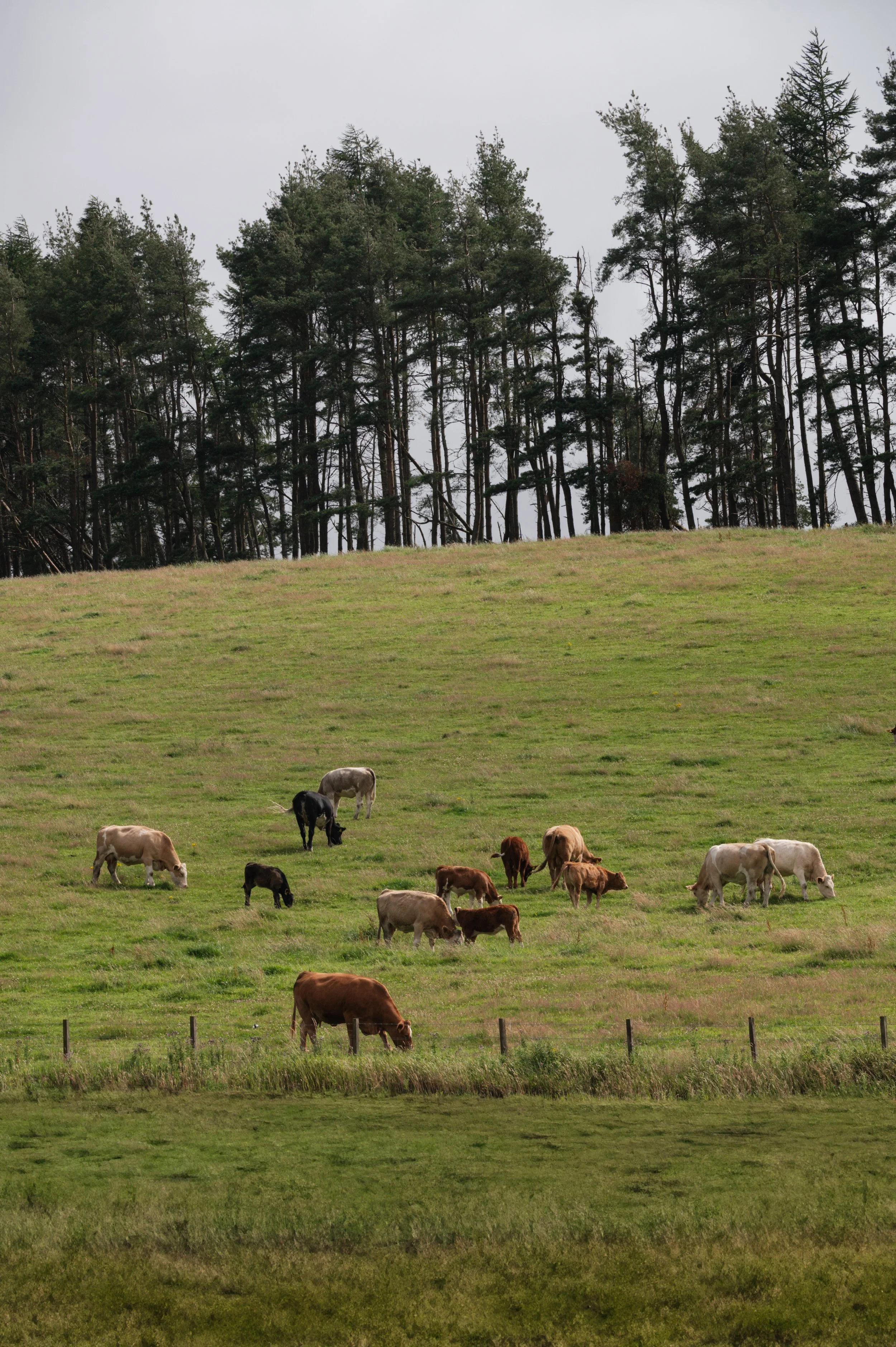
Dunsinnan itself has long been a place of retreat. In the 19th century, Edinburgh industrialist John Mackay Bernard bought the estate as both a working farm and an escape from city life, investing heavily in the land and buildings. It passed through the Bernard family and into the Sinclair line in the 20th century. Today, Dunsinnan is still run by the Sinclairs - Alex and his wife, Alice, the fifth generation of the family to call it home. There is still a working farm, and guests from outwith the family can now seek sanctuary here, too, at one of the couple’s three holiday lets.
The most recent addition to the collection is Macbeth’s, which I had the good fortune to visit. It was a mizzly evening when we arrived, and we were more than ready to shut out the elements and hunker down for the night.
In my mind - and by the Oxford English Dictionary’s definition - a bothy is a “rough hut used as a shelter or for temporary accommodation for shepherds or mountaineers.” Similarly, the Dictionary of the Scots Language describes a bothy as a “primitive dwelling”. Macbeth’s Bothy is far from either of those definitions. While it does offer shelter, there is nothing rough about it, and as much as you might wish it weren’t just temporary accommodation, unfortunately it is. Available to rent from £200 per night, you certainly don’t need to be a shepherd or mountaineer to enjoy this charming bolthole.
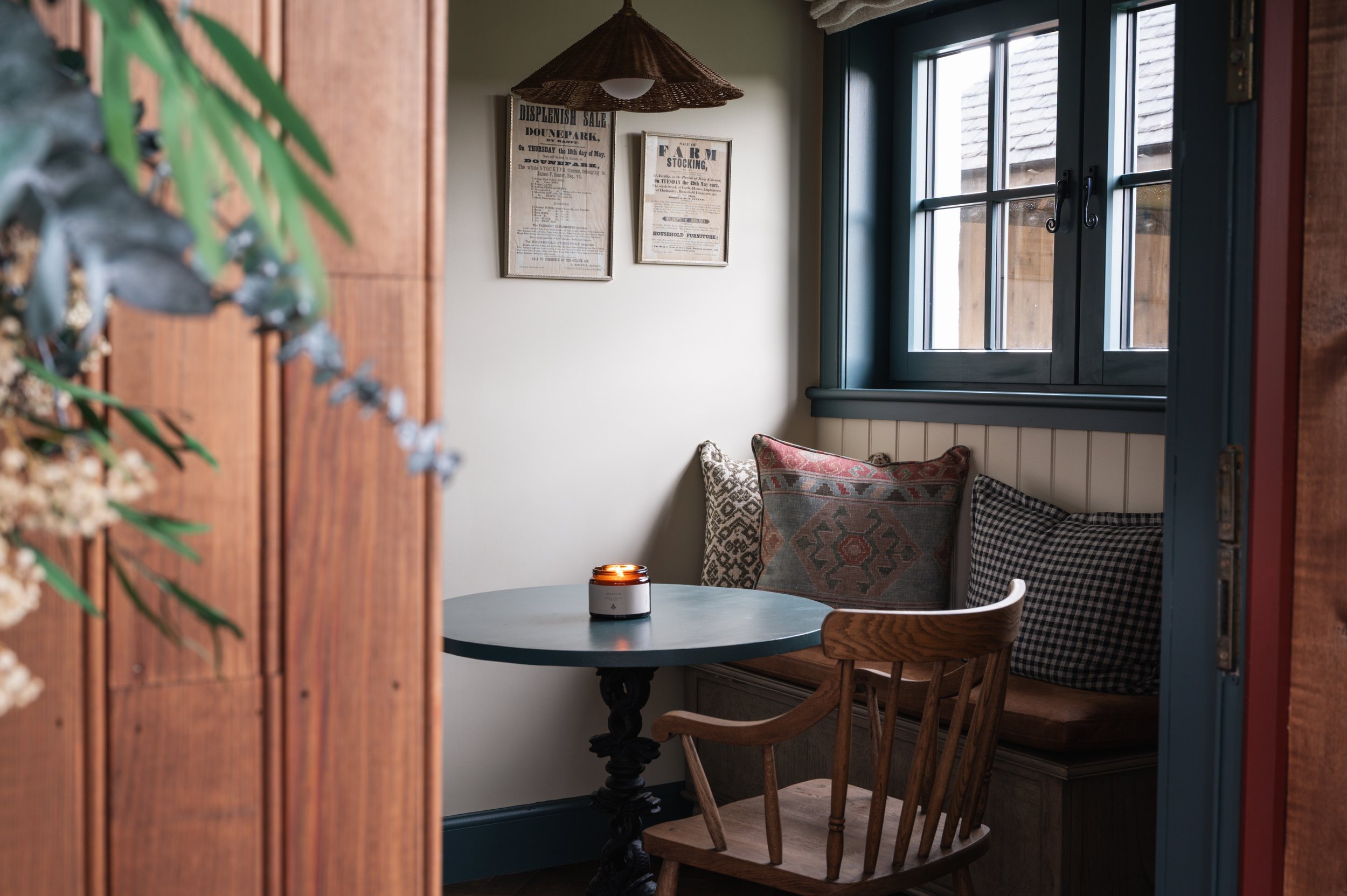
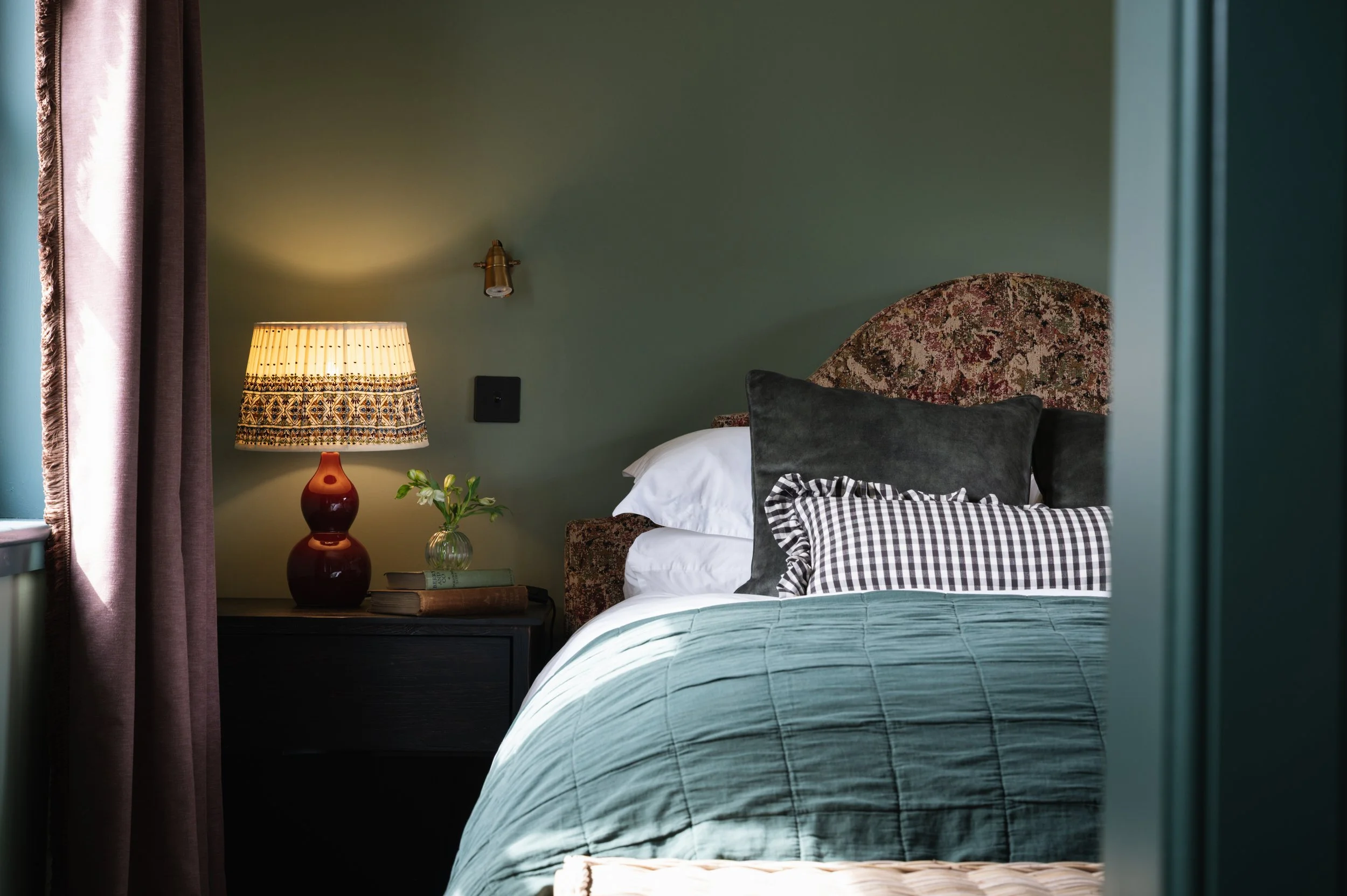
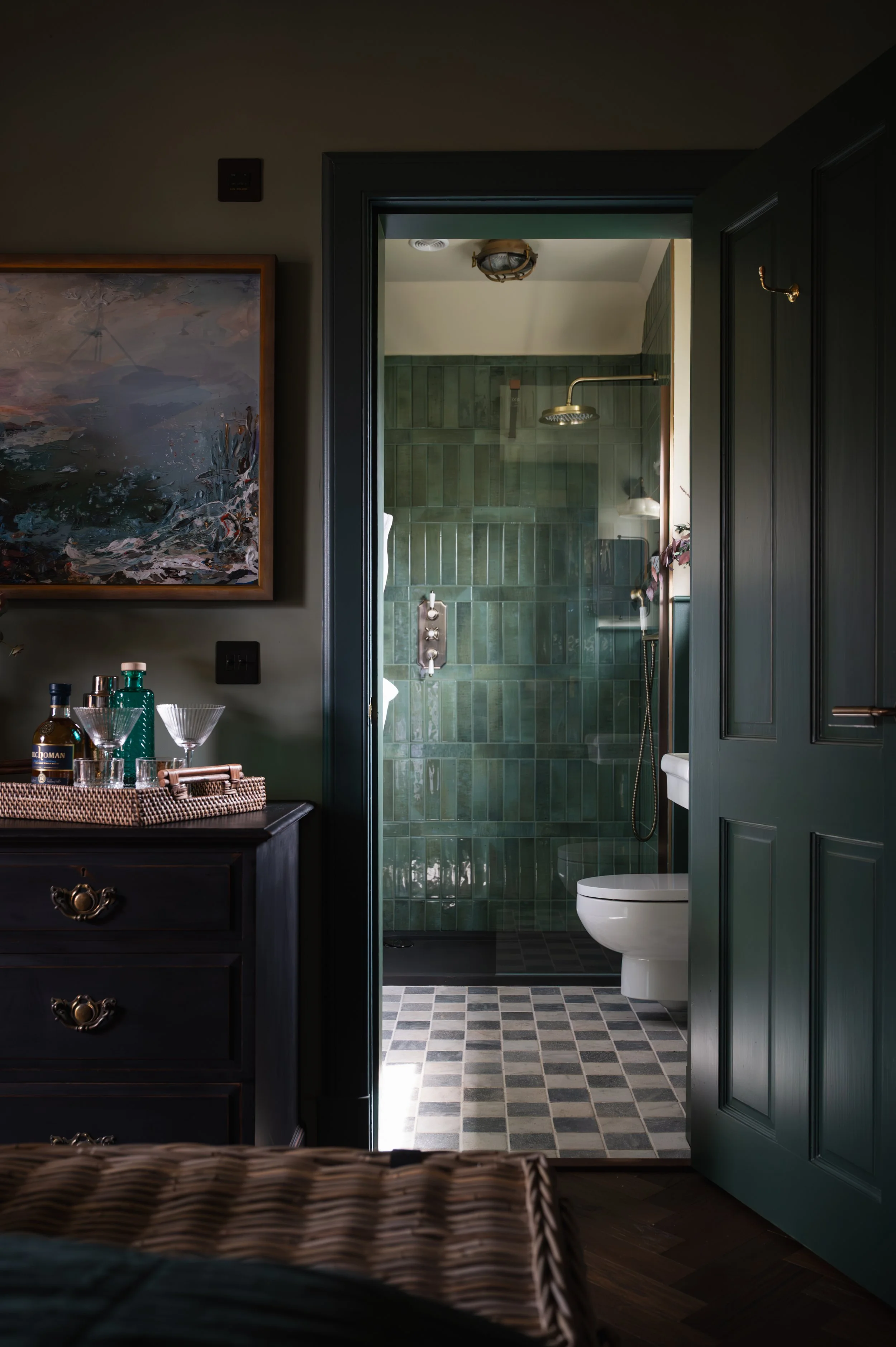
The space has been painstakingly curated, yet it feels utterly effortless – the mark of a true professional, in this case Jill Wordsworth of Edinburgh-based interior design studio, Fantoush. Her approach is eclectic, weaving together old and new through thoughtfully sourced furniture, art and textiles to tell the story of a place. This is especially clear at Macbeth’s.
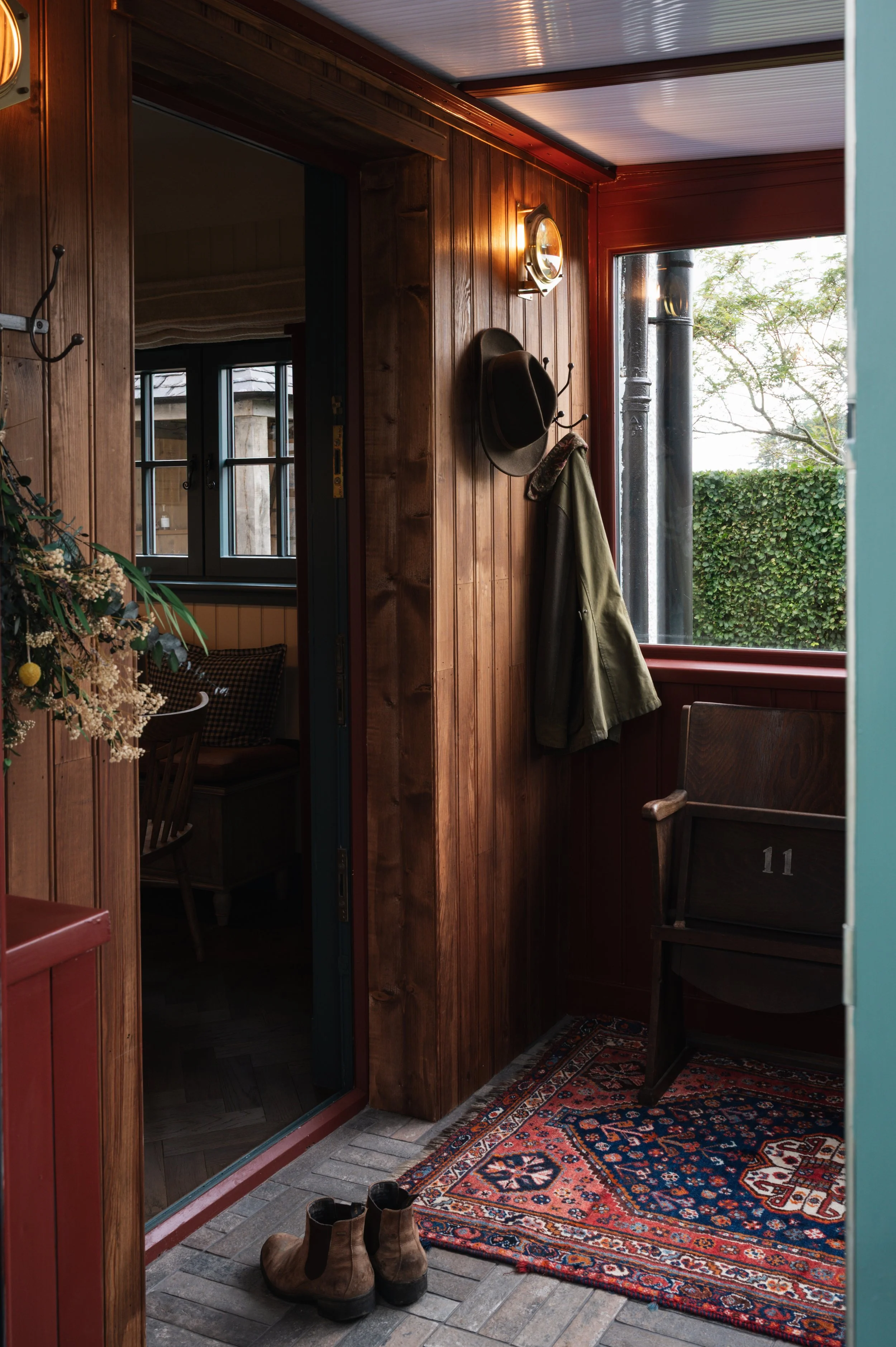
“For us, convincing Alice to keep the porch was key – from a functional point of view as well as for the story,” says Jill. “We sourced vintage theatre seats for it as a spot to take your boots off and to tie in with the theme in a subtle way. This wasn’t about putting Shakespeare quotes on the wall.”
“Macbeth is such a moody story, and Scotland itself can be so dark, so we focused on bringing in texture and layering colours.”
Shakespeare once asked, what’s in a name? In this case, rather a lot. Yes, it refers to that Macbeth, immortalised by the bard. In the play, nearby Dunsinane Hill is the site of the story’s most dramatic turning point: Birnam Wood appears to advance on the hill, and the witches’ prophecy is fulfilled. References to the story are tastefully woven into the bothy - a dog-eared copy of Macbeth from 1888 sits on a shelf, its margins bearing the trace of a previous owner’s notes. An oil painting of Birnam Wood, sourced by Alice, hangs on the bedroom wall. None of it feels forced, they characterise the space in a genuine, homely way.
If you like the idea of a cold plunge but prefer a warm bath, there is a generously sized copper tub in the garden, Alice’s pride and joy (and a lucky ebay find) ready to be filled with Laura Thomas Co. bubble bath. I’ll admit to having indulged in both a morning and evening soak (in the interests of journalistic integrity). How could I write an honest review without fully embracing the experience? Call it due diligence - morning and night, I was in that bath.
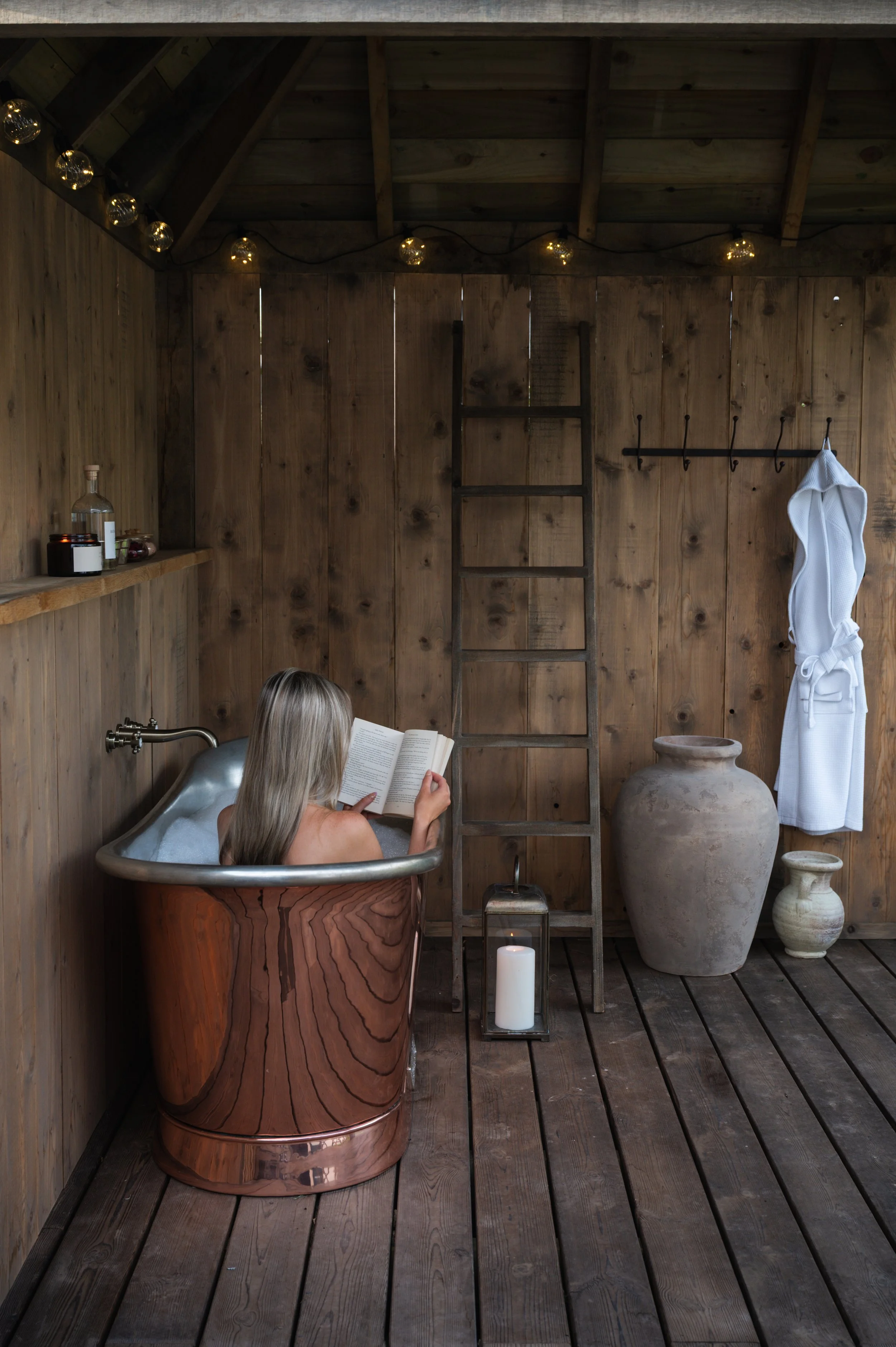
I’m not an early bird, but I do love a long, slow morning. Cormac, on the contrary, loves nothing more than a lie-in and can go from sound asleep to out the door in roughly eight minutes. I require time to adjust to the demands of the day, however, even if it is just a trip to Dunkeld. So, on our first morning at Macbeth’s, I was up with the larks, tiptoeing around in an effort not to wake him. With hot tea in hand, I drew my morning bath. It was raining slightly, but I didn’t mind. There was something so special about taking that half hour to myself, tucked away in my own wee private corner of the world, the rain only adding to the sense of peaceful solitude.
One of the many personal touches at Macbeth’s are the carefully selected books, arranged in small piles with obvious intention. Among them was Rosie Steer’s Slow Seasons. As I read about her solace in embracing the Celtic wheel of the year - welcoming the seasons with open arms - I felt my whole body relax, as though I’d been given permission to enjoy the present moment. That is precisely what Macbeth’s Bothy is all about.
I was beginning to wrinkle like a prune when my partner popped his head around the door, squinting in the morning light, and asked if I wanted a second cup of tea. I drained the bath and joined him for breakfast - eggs and bacon with sourdough toast - before a big walk around Dunkeld, bookended by two stops at Aran Bakery, a trip to Lòn the store and a nosy in Redwood Wines. Still, truth be told, we couldn’t wait to get back to Macbeth’s.
Macbeth’s Bothy makes you live more intentionally - slow down, take stock and appreciate the small things. Warm socks in the morning. A cosy bed when it’s cold outside. I don’t need much encouragement to savour these wee moments, but for people who live life in the fast lane, a weekend at Dunsinnan could be the answer.
You can tell that Alice pours her heart and soul into what she does. The love and care she puts into running Macbeth’s is unmistakable. “There’s something special about the bothy,” she says. “I think it might just be my favourite.”
I can see why. There’s something strange about feeling so at home in a place other people have also shared - but then there’s something comfortingly communal about that thought too… which might just be the essence of bothying.
If this is what bothying can be, then maybe I do like it. Who would have thought.
Eilidh Tuckett is a freelance journalist covering lifestyle, food and travel across Scotland.
Photography: Solasta Creative
Print edition of Edinburgh Life (January & February 2026). Postage included in price.